Microsoft Direct EA Leaves the True-Up With You

Microsoft’s FY2025 10-K still names two ways a large organization buys an Enterprise Agreement. Some customers transact directly, with sales support from partners Microsoft calls Enterprise Agreement Software Advisors. The same filing still describes the reseller channel. Partner analysts who track the large-account book say the commission that used to sit on those renewals (about $2.5 billion in 2023) was scheduled to disappear once large EAs finished moving to Microsoft Sales Direct in January 2026. Treat that pool as a partner estimate, not a 10-K line. The invoice now comes from Redmond. The true-up did not move with it.
That’s the problem.
This is not a partner-margin story. It is a work story. Someone still has to produce a defensible license position, calculate the annual true-up, and tell you what to deploy before the next EA. For more than two decades that someone sat in the channel, paid from a fee model that no longer funds the work. Microsoft’s own EA page still says you manage licensing through the life of the agreement “with the help of a Microsoft Certified Partner or a Microsoft representative.” That sentence is a fork, not a handoff. One of those two people has to own the number.
What Microsoft actually changed, and what it left on the table
The Enterprise Agreement is still a three-year, organization-wide program. Software Assurance is still in the paper. The true-up is still the annual process that captures users, devices, products, and services you added without placing a separate order. None of that retired because billing went direct.
What changed is who gets paid to sit between the estate and that process. The 10-K describes ESAs as licensing advisors and still describes the reseller channel. US Cloud estimated a 1.25 percent commission on a $200 billion three-year EA market ($2.5 billion) and said Microsoft would stop paying that out after 31 December 2025 once large accounts sat on Microsoft Sales Direct. Treat that as a partner estimate, not a 10-K line. The direction is not in dispute: large EAs bill direct.
On 12 May 2026, Bytes Technology Group reported FY26 operating profit of £62.7 million, down 5.6 percent. Microsoft had changed partner incentives on 1 January 2025, cutting certain transactional EA fees and pushing partners toward CSP consumption and services. Bytes realigned toward services. That is a partner P&L. It is also a signal about the work that used to be funded on the EA.
On 14 May the UK Competition and Markets Authority opened a Strategic Market Status investigation into Microsoft business software, licensing in scope. That is attention, not a finding, and not a change to your agreement. Distinct from the 2025 channel squeeze. This is the pool gone, and the work still on your side of the table.
Direct billing did not retire continuous Microsoft work
Enterprise customers do not engage with Microsoft’s licensing structure once every three years. They engage with it continuously: compliance, true-up, deployment decisions, budget reviews. That is the SAM job. Microsoft’s EA documentation describes the same loop: add during the term, account for it at true-up, reset at renewal.
The advisory function does not disappear because the invoice now comes from Redmond. It moves. Either you own it in-house, you buy it as a scoped service, or you walk into the next EA with Microsoft’s number and no independent read on growth, unused seats, or what you actually deployed.
Do not let Microsoft frame this as whether you want a closer relationship. Direct billing is a commercial choice the 10-K already describes. The question is narrower: who calculates your true-up this year, against which entitlements, and can you defend that number if the partner who used to do it has been told to sell managed services instead.
This is not a criticism of the teams who still have an LSP on the account. Traditional SAM tools collect comprehensively and answer slowly. Partners used to sit in the gap between the report and the renewal. That gap is interpretation work. An analysis that arrives after Microsoft has framed the meeting as a cloud-and-services conversation is a document. One that arrives while the true-up is still open is a decision input.
If that feels familiar, the problem is not your team’s maturity. A commercial transition is being answered with a channel slide.
Picture your procurement director, sixty days from the next EA. Finance wants the growth number. The CIO wants deployments in scope. Microsoft will walk in with a direct-bill conversation and a consumption agenda. If SAM needs three weeks to turn last year’s true-up pack into this year’s position, you have already lost the framing of the meeting.
Managed services and cloud consumption are real businesses. They are not a substitute for a current Effective License Position.
What you must own before the next EA
Do this in the next thirty days, as a decision pack rather than a project. The event is the next true-up and the next EA conversation, not a partner press release.
| Work the channel used to fund | Own in-house if… | Buy separately if… |
|---|---|---|
| Continuous compliance / license position | You can produce a current, defensible ELP without waiting on the partner who used to run it | Your file still depends on one named advisor who is being retasked onto services |
| True-up | You can say what grew, against which entitlements, and who signs the number | Nobody in the building has done a true-up without the LSP worksheet |
| Deployment advice | You can decide SKU, program, and cloud from your own estate, not from a commission-funded recommendation | The last “what should we deploy” answer came from the reseller, not from SAM |
| Renewal / budget pack | A non-specialist can brief the CIO in fifteen minutes from what you have today | The pack is still last year’s partner deck with this year’s logo |
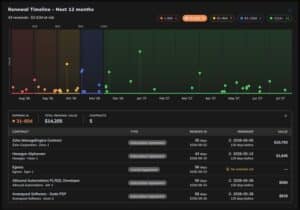
Can a non-specialist brief the CIO in fifteen minutes from the pack you have today? If the answer is no, you do not have a Microsoft Direct EA position. You have a library and a missing advisor. Put that pack next to a renewal timeline so the next EA date is visible, not buried in last year’s partner deck.
Do not put an invented 2026 commission percentage in a board pack. The published partner estimate is a $2.5 billion pool that was scheduled to go to zero. Your exposure is the work that pool used to buy, costed against your own estate.
Name the owner. If the answer is still “the partner will handle it,” get that in writing as a scoped service, with a deliverable and a date, not as a leftover from a fee model that no longer exists.
The decision layer, not another inventory
You already have discovery data and an EA file. The gap is not another inventory. The gap is turning that estate into a decision before the next true-up: what you run, what you owe, what grew, and what you will not let Microsoft frame as a managed-services conversation. LICENSEWARE sits on the inventory and ITSM tools you already run. It is not a rip-and-replace SAM suite. It is a decision layer: what matters, why it matters now, what should happen next. A current Microsoft position from the deployment and entitlement data you already have is the point.
If you are heading into a true-up or an EA conversation and your current tools still need three weeks to turn a deployment list into that number, book an Audit Readiness Review. You can also start on the free plan and run the analysis on your own data.
The question to walk in with
Do not let the next meeting open as “are we still with the partner.” The right question is: what are we actually running, what does the true-up look like on our entitlements, who owns that number now that large EAs bill direct, and can we defend it before Microsoft walks in. That is a data question, not a sales question.
The vendor will walk in with a number. The only question is whether you have yours first: current, defensible, and tied to the contract in front of you.
FAQ
Is this the 2025 channel squeeze again? No. That was the pool shrinking. This is large EAs already on Microsoft direct billing, and the true-up work that the old fee model used to fund.
Did Microsoft invent direct billing in 2026? No. The FY2025 10-K still describes organizations that transact directly through Enterprise Agreements, with ESA support. The 2026 change is the large-account commission going away without a new funded advisory model.
Does “pivot to managed services” replace true-up advice? Microsoft and the channel treat that as long-term counsel. It is not a substitute for continuous compliance, true-up, and deployment work on your estate.