OJDM
Find the Java installs that are actually licensable, the applications using them, and how much your legacy entitlements offset against the new Universal Employee subscription.
Oracle Java SE
312 installs · classified by vendor, version, process path
The pipeline
Discover. Classify. Cost.
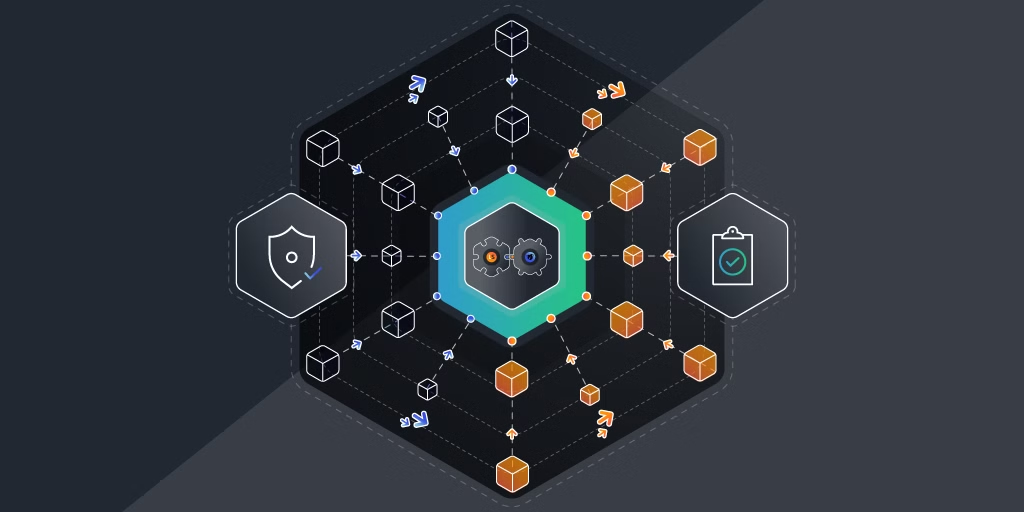
OJDM does not stop at finding Java on disk. It captures the process path so you know which application is using it, classifies vendor and licensability, then calculates legacy NUP and Processor requirements against the new Universal Employee metric so old entitlements offset new subscription cost.
"/api/v2/assets"
Generic discovery tools tell you Java exists. The open-source OJDM Collector adds what they miss: JDK/JRE process path, command line, and whether the process is actually running. That is the signal Oracle audits on.
Each install is classified by vendor (Oracle JDK, Eclipse Temurin, Amazon Corretto, Azul Zulu, IBM, SAP) and by licensability rules: post-2019 Oracle JDK is licensable, 8u202 and earlier are free for commercial use, NFTC builds have their own terms.
The cost calculation walks the tiered Universal Employee pricing, then nets out legacy Processor and NUP entitlements you may already own. Result is the real subscription delta, not a list-price scare number.
What you get
The full OJDM analysis feature list.
The capabilities that move the Oracle Java conversation from a list-price scare to a defensible position with evidence. All seven, pulled directly from the OJDM docs.
Component and product recognition
Large recognition catalog that captures every licensable Java product and component installed in the environment, Oracle JDK and JRE alongside Eclipse Temurin, Amazon Corretto, Azul Zulu, IBM, SAP, mapped to the right version family.
Licensable installation identification
Distinguishes installs that are licensable from those that fall under free-for-personal-use, free-for- commercial-use, or NFTC terms. Build number granularity, not just major version.
Processor and NUP calculations
Most customers carry older Processor and Named User Plus entitlements. OJDM calculates the legacy metric requirement on the same data so those entitlements offset licensable installs, minimizing new Universal Employee subscription.
Version support insights
Out-of-support versions, free-for-commercial-use windows, NFTC builds, and suggested upgrade timeframes, surfaced per build, not per major version.
Process path & process running discovery
We do not stop at identifying which devices have Java installed. OJDM Collector discovers the JDK/JRE process path, command line, and whether the process is actually running, so you can tell which application is using licensable Java, which is what Oracle audits on.
Non-Oracle Java
Separates Oracle JDK from non-Oracle distributions already in the environment: Eclipse Temurin, Amazon Corretto, Azul Zulu, IBM Java SDK, SAP Java. When a non-Oracle vendor is already deployed, remediation is a rollout, not a procurement cycle.
Comprehensive infrastructure mapping
Detailed virtual-to-physical structures built for Processor-based analysis. OJDM considers all virtual relationships, host, cluster, VM, partition, so when an install sits on a virtualized estate, the Processor count is right, not inflated and not understated.
Analysis Insights
Decisions. Evidence. Numbers.
Every classification OJDM makes is logged with the evidence behind it: vendor, version, process path, free or licensable rule applied. The final subscription requirement is netted against your existing entitlements.
Roll back 126 installs to Oracle JDK 8u202 or migrate to Temurin where the app supports it
Decommission 34 unused installs flagged by OJDM Collector as not running
Apply 41 legacy NUP entitlements to offset the Universal Employee tier 3 subscription
Component and product recognition
Every Java product recognized at build-level granularity.
Licensable installation identification
Separates licensable Oracle builds from free and NFTC builds.
Processor and NUP calculations
Legacy Processor and NUP entitlements offset the new subscription.
Version support insights
Out-of-support versions and upgrade timeframes surfaced per build.
Process path discovery
Captures JDK/JRE process path, command line, and run status.
Non-Oracle Java identification
Identifies Temurin, Corretto, Zulu, IBM, SAP already deployed.
Actionable remediation findings
Ranked actions: rollback, decommission, offset, migrate.
Watch demo
Identify which Java installs actually require a license, before an audit lands.
A walkthrough of how OJDM classifies Java installs by vendor, version, and process path inside LICENSEWARE, and how it computes Universal Employee cost against legacy entitlements.
Cost calculator
What might your licensable Java cost?
Estimate the Oracle Java SE Universal Subscription based on employee count. Then run OJDM to see how much of that number is actually licensable, and how much your legacy entitlements can offset.
Universal Employee count is your full workforce (employees, contractors, agents) per Oracle's definition, not just Java users.
Heads up. This is the list-price ceiling, before OJDM identifies free-for-commercial installs, non-Oracle remediation routes, unused installs, and legacy NUP/Processor offsets. Most estates see the real number land well below this.
Articles
Reading on Oracle Java licensing.
Background pieces from the LICENSEWARE blog on the Oracle Java licensing changes and how to assess exposure before an audit lands.
Why care about Oracle Java?
A short overview of why Oracle Java analysis matters right now, what LICENSEWARE covers, and the benefits of running OJDM before an audit lands. Made to share with stakeholders who do not live in licensing every day.