
Oracle Java
Oracle Java SE licensing on the employee metric, subscription cost, audits, and stay versus OpenJDK. This category is the Java file, not Database processor or NUP math.
Coverage tracks what the Universal Subscription actually counts, how an audit treats installs versus headcount, and when a stay-or-exit decision is cheaper than a new employee count. Start here for Java-only questions. Database and Fusion stay in the parent Oracle category.

Oracle Java SE Subscription Cost Is an Employee Metric
Oracle Java SE subscription cost is per employee, not per install. Published bands, Employee definition, what to count this week, stay versus OpenJDK.

Why Oracle Java Audits Price Headcount, Not Installs
Oracle Java SE Universal Subscription is sold per employee. LMS still audits. What SAM should lock before the next Java, OCI, or support conversation.

Joiners, Movers, and Leavers: The ITAM Process HR Already Owns (and SAM Teams Should Be Connected To)
Every organization runs a Joiners, Movers, and Leavers (JML) process. HR owns it for payroll,…

Why Oracle Java Still Prices Your Headcount, Not Installs
Azul’s 2026 survey finds 92% concerned about Oracle Java pricing. The metric is employees, not installs. The number SAM should walk in with.

Oracle Java: Renewal or Replacement?
The parent pack is the Oracle Java SE subscription cost page: published bands, Employee definition,…

The Cost of Unsupported OpenJDK in Financial Infrastructure
For twenty years, the global financial ecosystem has been constructed on the foundation of Java.…

The Oracle Java 21 Countdown Is On
The September 2026 Java Cliff: Are You Ready? The end of free updates for Oracle…

Oracle VirtualBox’s Hidden Licensing Shift: What SAM Teams Must Know
Oracle quietly revised the licensing terms for VirtualBox’s Extension Pack, eliminating the previous free evaluation…
Oracle Java Audits Surge: 73% of Users Targeted as Licensing Changes Drive Mass Migration to Open Source
A startling new survey has revealed the extent of Oracle’s aggressive audit campaign targeting Java…
New £10 Millon Oracle Java Deal Includes Waiver of Historic Fees for UK Universities
In a move that provides a crucial financial and administrative lifeline to the UK’s higher…
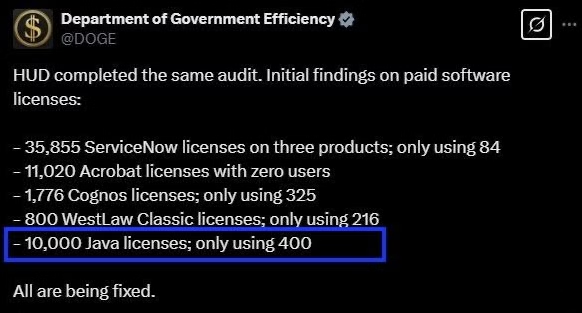
Navigating Oracle Java Licensing: Are You Making Costly Mistakes?
Recent revelations from government audits, such as those at HUD, posted by @DOGE demonstrate how…

How to assess your Java licensing, a short guide.
In the ever-evolving world of software asset management (SAM), staying compliant with licensing requirements while…

Five Oracle Licensing Pitfalls to Avoid 🎣
Oracle has been in the process of moving its complex installed base to the cloud…

Manage your Java with OJDM ☕
Java is the backbone of countless applications worldwide. As a business, understanding your Java licensing…

Identify Java paid components installed on your device
Here is a detailed step-by-step guide that includes code snippets and example outputs on how…

New Oracle Java Pricelist
Oracle has just rolled out a new pricing model for their Java SE subscriptions, moving…

Do you need to pay for Oracle Java?
Now, let’s be clear – Java has never been completely free. Some licensing was free…